
7 Things Every Tenant Should Do Before Moving Out
By Deep, Bond Cleaners Sunshine Coast·Sponsored
Moving house is often described as one of life's most stressful events. Between organising removalists, packing boxes, updating your address, and settling into a new home, there is already plenty to think about. For renters, there is an additional challenge that should not be overlooked: preparing the property for the final inspection.
Many tenancy disputes occur because tenants underestimate what is required when moving out. A few missed details can sometimes result in delays to bond refunds or unnecessary disagreements with property managers and landlords.
After helping thousands of Australian tenants through the moving process, we have seen firsthand what works and what often gets forgotten. The good news is that a little planning can make the entire experience much smoother.
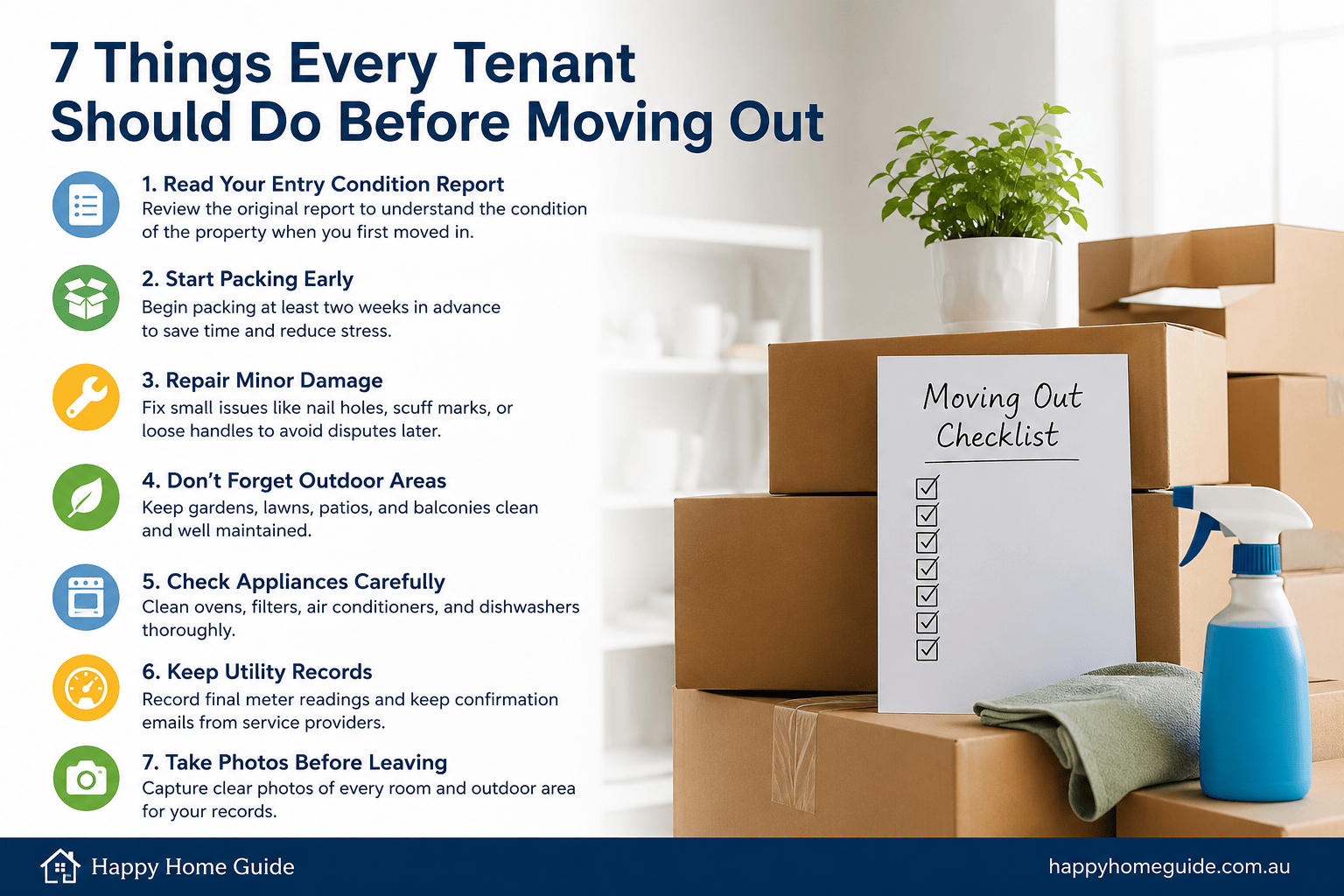
Here are seven important things every tenant should do before handing back the keys.
## 1. Read Your Entry Condition Report
One of the first things you should do before moving out is locate your original entry condition report.
This document records the state of the property when you moved in and serves as an important reference point when comparing the property's condition at the end of your tenancy. It can help you identify existing wear and tear that was already present and highlight any areas that may need attention before the final inspection.
Reviewing the report early gives you enough time to address potential concerns rather than rushing at the last minute. It can also provide valuable evidence if there is any disagreement regarding the condition of the property after you leave.
## 2. Start Packing Earlier Than You Think You Need To
Packing is one of the most time-consuming parts of moving house, and many people leave it too late.
Starting at least two weeks before your move can significantly reduce stress. Begin with items you use less frequently, such as seasonal clothing, books, decorations, and spare household items. As moving day approaches, you can focus on everyday essentials.
Packing early also helps reveal areas that need cleaning. Once cupboards, wardrobes, and storage spaces are emptied, it becomes much easier to remove dust, wipe surfaces, and inspect for any damage.
A well-organised move not only saves time but also allows you to focus on the finer details that can make a positive impression during the final inspection.
## 3. Repair Minor Damage Before the Inspection
Over time, even the most careful tenants may cause minor wear and tear around the home. Small picture hook holes, scuff marks on walls, loose cupboard handles, damaged flyscreens, or missing light bulbs are common examples.
While these issues may seem insignificant, they can attract attention during an inspection. In many cases, simple repairs can be completed quickly and at a relatively low cost.
Taking the time to fix minor damage demonstrates that you have looked after the property and may help prevent disputes later. If you are unsure whether something requires repair, it is often worth discussing it with your property manager before moving out.
Remember that addressing small issues now is usually easier and less expensive than dealing with them after the inspection process has begun.
## 4. Don't Forget About Outdoor Areas
When preparing a property for inspection, many tenants focus heavily on indoor spaces and unintentionally overlook outdoor areas.
Patios, balconies, garages, driveways, courtyards, and gardens are all commonly included in end-of-lease inspections. Property managers often pay close attention to these spaces because they contribute significantly to the overall presentation of the property.
Simple tasks such as mowing the lawn, removing weeds, sweeping pathways, cleaning outdoor furniture areas, and disposing of rubbish can make a noticeable difference.
If the tenancy agreement requires ongoing garden maintenance, ensuring the outdoor areas are tidy and presentable can help avoid unnecessary concerns during the inspection.
## 5. Pay Extra Attention to Appliances
Certain appliances are among the most commonly missed items during an end-of-lease clean.
Ovens, stovetops, rangehood filters, dishwashers, air conditioning filters, exhaust fans, and window tracks can accumulate dirt and grease over time. Because these areas are often used daily, it can be easy to overlook how much cleaning they actually require.
Property managers frequently inspect these items closely because they are highly visible and often difficult to clean properly once neglected.
Allowing extra time for appliance cleaning can improve the overall presentation of the property and reduce the likelihood of additional cleaning being requested after the inspection.
If professional cleaning services are being used, ensure the scope of work clearly includes these areas.
## 6. Keep Records of Utility Disconnections
Many tenants focus solely on cleaning and packing while forgetting the importance of keeping records related to utilities.
Before disconnecting electricity, gas, water, or internet services, take photographs of final meter readings where applicable and keep confirmation emails from service providers. It is also wise to retain copies of any final bills.
Having these records available can be helpful if questions arise regarding outstanding accounts or service disconnection dates.
Good record-keeping provides peace of mind and ensures you have supporting information readily available should any issues need clarification after moving out.
## 7. Take Detailed Photos Before Handing Back the Keys
One of the simplest but most valuable steps a tenant can take is documenting the property's condition before leaving.
Once cleaning and repairs have been completed, take clear photographs of every room, including walls, floors, ceilings, bathrooms, kitchens, garages, and outdoor areas. It is also beneficial to photograph any areas that received special attention, such as repaired damage or professionally cleaned spaces.
These images can serve as useful evidence if there is any disagreement about the condition of the property after you have moved out.
With modern smartphones making high-quality photography easy, there is little reason not to spend a few extra minutes creating a complete visual record before handing over the keys.
## Final Thoughts
Moving out of a rental property does not have to be overwhelming. By preparing early, staying organised, and paying attention to the details, tenants can significantly reduce the stress associated with the final inspection process.
Simple actions such as reviewing the entry report, repairing minor damage, cleaning thoroughly, maintaining outdoor areas, and keeping good records can make a substantial difference.
Every tenancy eventually comes to an end, but leaving a property in excellent condition helps create a smoother experience for tenants, landlords, and property managers alike. With proper preparation, you can move into your next home with confidence and improve your chances of receiving your bond refund without unnecessary delays or disputes.
Sponsored disclosure: This article was paid for or contributed by a third party. Views are the author’s own and don’t represent an endorsement by Happy House Guide.